
The No-Repairs Sale: How Cash Buyers Price Houses Sold in As-Is Condition
You’re standing in your living room, looking at the water stain on the ceiling from last year’s leak. The kitchen cabinets are hanging crooked. The AC barely limps through summer. And you’re wondering: how much will a cash buyer actually pay for this house as-is?
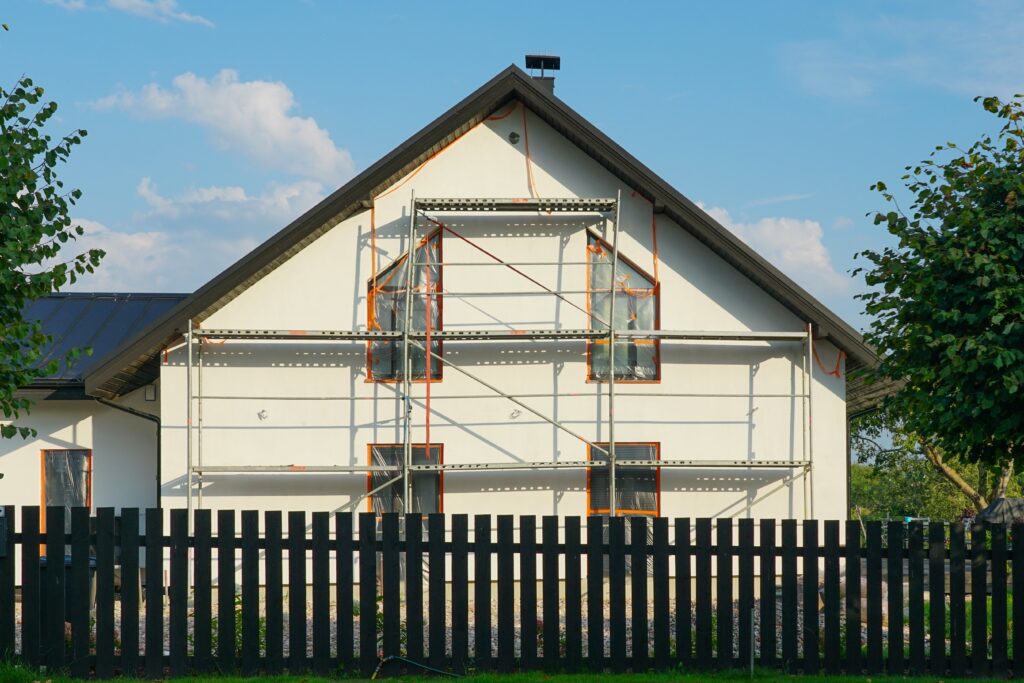
Here’s what most homeowners don’t realize: cash buyers don’t just throw out random lowball numbers. They’re using a specific formula based on your home’s current condition, repair costs, and after-repair value. Understanding this formula helps you know whether an as-is offer is fair or whether you’re leaving money on the table.
In this guide, you’ll learn exactly how cash buyers calculate as-is offers, why the numbers come out the way they do, and how to get the best possible price without spending a dime on repairs.
What “As-Is” Really Means When Selling to Cash Buyers
When you sell your house as-is, you’re selling it in its current condition with zero obligation to fix anything. That cracked foundation? The buyer handles it. The outdated electrical panel? Not your problem. The overgrown yard and peeling paint? The buyer takes it all.
But “as-is” doesn’t mean “any price goes.” Cash buyers still need to make sure the numbers work for them. They’re buying your property, paying for all repairs, and either reselling it or renting it out. That means they need enough margin to cover costs and make a profit.
In Las Vegas, most as-is sales happen for one of three reasons. First, the house needs major repairs that the seller can’t afford or doesn’t want to deal with. Second, the seller needs to close quickly due to foreclosure, divorce, or relocation. Third, the property is inherited and the heirs just want it sold.
The difference between an as-is sale and a traditional sale is this: in a traditional sale, you fix up the house to get top dollar. In an as-is sale, the buyer gives you a discounted price today and handles all repairs themselves. You’re essentially selling your repair problems along with your house.
The Three Factors Cash Buyers Use to Calculate Your As-Is Offer
Cash buyers aren’t guessing when they make you an offer. They’re running numbers based on three concrete factors that determine what your house is worth in its current condition.
After-Repair Value (ARV) comes first. This is what your house would sell for on the open market if it were in perfect condition. Cash buyers pull recent sales of similar homes in your neighborhood that were recently renovated or in excellent shape. In Las Vegas, they’re looking at comparable properties within a half-mile radius that sold in the last 90 days.
If similar homes in your area are selling for $350,000 in move-in condition, that’s your ARV baseline. This number doesn’t change based on your home’s current problems. It’s simply the ceiling value.
Estimated Repair Costs come second. During the property walkthrough, buyers are mentally calculating every repair needed. That includes obvious issues like roof damage or HVAC replacement, plus hidden costs like bringing old electrical systems up to code or dealing with foundation settling common in Las Vegas’s soil conditions.
Experienced cash buyers have done this hundreds of times. They know a kitchen remodel in Las Vegas typically runs $15,000 to $35,000 depending on size and finishes. They know a new roof costs $8,000 to $15,000 for a standard single-story home. They know HVAC replacement runs $5,000 to $8,000. These aren’t guesses. They’re based on actual contractor bids from their regular repair crews.
Profit Margin comes third. Cash buyers need to make money on the deal. They’re taking all the risk, paying all the repair costs upfront, and dealing with the time and hassle of renovation. Most cash buyers in Las Vegas aim for a 15-20% profit margin on wholesale deals or fix-and-flip projects.
This isn’t greedy. It’s business math. When you factor in holding costs, property taxes, insurance, utilities during renovation, and the risk that repairs might cost more than estimated, that 15-20% margin can shrink quickly.
Here’s the basic formula: As-Is Offer = ARV – Repair Costs – Profit Margin – Transaction Costs
How Cash Buyers Assess Repair Costs (And Why Their Estimates Matter)
When a cash buyer walks through your Las Vegas home, they’re seeing dollar signs everywhere. But not in the way you might think. They’re seeing costs.
The evaluation starts outside. Roof condition matters because replacement is expensive. They’re checking for cracked tiles, worn shingles, or signs of leaking. In Las Vegas, the intense sun and occasional heavy rains take a toll on roofing materials. A roof that looks fine to you might have 5 years of life left, but a buyer planning to resell wants 15-20 years minimum.
The buyer checks your home’s curb appeal because first impressions affect resale value. Dead landscaping, peeling exterior paint, cracked driveways, and broken fences all factor in. Even if you think these are minor issues, they add up. Bringing a front yard back to life in Las Vegas’s climate costs $3,000 to $8,000 depending on size and whether you’re adding desert landscaping or grass.
Inside, they’re looking at the big-ticket items. Kitchen and bathrooms drive home value, so outdated or damaged ones need renovation. An old kitchen with worn cabinets and broken appliances might need $20,000 to $30,000 to modernize. Bathrooms with old fixtures, cracked tiles, or water damage can run $8,000 to $15,000 each to update.
They’re checking mechanical systems closely. When was the HVAC last serviced? Does it cool the house effectively during 115-degree summer days? Is the water heater original to the home? Are there signs of plumbing issues like slow drains or water stains? These systems don’t show well in photos but they’re dealbreakers for retail buyers.
Foundation issues get special attention in Las Vegas because of soil conditions. The expansive clay soil here shifts with moisture changes, causing foundation movement and cracking. Even minor foundation repairs start at $5,000 and can easily reach $20,000 to $40,000 for major stabilization work.
Here’s why their estimates matter to you: if a cash buyer is overestimating repair costs, you’re getting a lower offer than you should. If they’re underestimating, they might back out after getting contractor bids or they might lose money on the deal and go out of business. You want a buyer who’s accurate and realistic.
Professional cash buyers like We Buy Houses Las Vegas have years of experience estimating repairs and established relationships with contractors who give them fair pricing. That accuracy benefits you because the offer they make is the offer that closes. No surprises, no renegotiations.
Why As-Is Offers Are Lower (And When They’re Still Worth It)
Let’s be honest: as-is offers are lower than retail prices. If you could sell your house for $300,000 fixed up, an as-is cash offer might come in at $220,000 to $250,000 depending on how much work it needs.
That $50,000 to $80,000 difference bothers some sellers. They think cash buyers are ripping them off. But here’s what that money actually covers.
First, there’s the actual repair costs. If your house needs $40,000 in repairs, that comes directly off the top. The buyer is writing checks to contractors for work you’re not doing. That’s real money leaving their account.
Second, there are carrying costs while repairs happen. Property taxes don’t stop. Insurance continues. Utilities stay on. In Las Vegas, you’re looking at $300 to $600 per month just to hold the property empty while work gets done. Repairs typically take 30 to 90 days, so that’s another $900 to $5,400 in holding costs.
Third, there are transaction costs when they resell. Real estate commissions run 5-6% of the sale price. On a $300,000 house, that’s $15,000 to $18,000. Then add title insurance, escrow fees, and closing costs which add another $3,000 to $5,000.
Fourth, there’s risk. What if the market drops during renovation? What if they find termites behind the walls? What if repairs cost more than estimated? Cash buyers are absorbing all that uncertainty.
So when is an as-is offer still worth taking?
You should seriously consider an as-is sale when you don’t have money for repairs. If your air conditioning dies and you can’t afford the $7,000 replacement, selling as-is makes sense. Borrowing money to fix up a house you’re selling rarely works out financially.
It makes sense when you need to sell quickly. Maybe you’re facing foreclosure and need to close before the auction. Maybe you got a job across the country and start in 30 days. Maybe you inherited a property and just want it off your hands. As-is sales close in 7 to 14 days versus 60 to 90 days for traditional sales.
It makes sense when the house needs more work than you can handle. Some properties need so much repair that fixing them doesn’t make financial sense for the seller. If you own a house that needs $80,000 in repairs, spending that money might only increase the value by $100,000. You’d net $20,000 more but you’d spend months dealing with contractors. An as-is sale gives you certainty now.
It makes sense when you want to avoid the hassle. Listing a house traditionally means repairs, staging, showings, negotiations, inspections, appraisals, and potential deals falling through. Some sellers would rather take less money and be done.
Real Numbers: What As-Is Pricing Looks Like in Different Scenarios
Let’s look at three real Las Vegas scenarios to see how as-is pricing actually works.
Scenario 1: Outdated But Structurally Sound Home
You own a 1,600 square foot home in North Las Vegas, built in 1985. It has an original kitchen and bathrooms, worn carpet, old paint, and landscaping that died during the pandemic. The HVAC is 12 years old but still works. The roof has 7 years of life left. Similar updated homes in your neighborhood sell for $320,000.
Estimated repairs: New kitchen $18,000, bathroom updates $12,000, new flooring $8,000, interior paint $4,000, landscaping $5,000, miscellaneous $3,000. Total: $50,000.
Cash buyer calculation: $320,000 ARV – $50,000 repairs – $48,000 profit margin (15%) – $18,000 transaction costs = $204,000 as-is offer.
You’d net around $198,000 after your closing costs. If you listed traditionally and got $310,000 after pricing below comps, you’d pay $18,600 in commission, $5,000 in closing costs, and you’d have spent $50,000 on repairs. Your net would be $236,400. The difference is $38,400 but you avoided months of work and the risk of buyer financing falling through.
Scenario 2: House Needing Major Mechanical Work
You inherited a 1,800-square-foot home in Henderson. The HVAC died, the roof leaks, the water heater is broken, and there’s water damage in two bedrooms. The kitchen is functional but dated. Similar homes in good condition sell for $380,000.
Estimated repairs: New HVAC $7,500, roof replacement $14,000, water heater $1,800, water damage repair and remediation $8,000, kitchen update $15,000, paint and flooring in damaged rooms $6,000, miscellaneous $4,000. Total: $56,300.
Cash buyer calculation: $380,000 ARV – $56,300 repairs – $57,000 profit margin (15%) – $21,000 transaction costs = $245,700 as-is offer.
This scenario shows why selling as-is makes sense for inherited properties. You’d need to invest $56,300 upfront just to make the house sellable. Most heirs don’t want to manage that process or front that cash. The as-is sale lets you walk away with a check and zero hassle.
Scenario 3: Foundation Issues and Code Violations
You own a 2,000 square foot home in Spring Valley with foundation cracks, outdated electrical that needs updating to pass code, and an unpermitted bedroom addition. Similar homes without these issues sell for $410,000.
Estimated repairs: Foundation repair $18,000, electrical upgrade $12,000, permitting and legalizing addition $8,000, cosmetic updates $15,000. Total: $53,000.
Cash buyer calculation: $410,000 ARV – $53,000 repairs – $61,500 profit margin (15%) – $23,000 transaction costs = $272,500 as-is offer.
This scenario matters because traditional buyers won’t touch a house with foundation issues or code violations. Their lenders won’t approve loans. Your only realistic options are cash buyers or spending the money yourself to fix everything first.
How to Get the Best As-Is Offer Without Making Repairs
You don’t have to fix anything to maximize your as-is offer, but you can take steps that help buyers see your property’s true value.
Clean and declutter before buyers visit. You’re not renovating, but showing them a clean house helps them focus on the structure rather than getting distracted by the mess. A cluttered house makes buyers wonder what else is wrong. A clean house with obvious repair needs is easier to evaluate accurately.
Get your own repair estimates for major issues. If you know your roof needs replacing, get three quotes from local roofing companies. When the cash buyer says they’re deducting $18,000 for roofing and you have quotes showing $11,000, you have leverage to negotiate. Knowledge is power in these transactions.
Pull permits and records for major work you’ve done. If you replaced the HVAC 5 years ago, show the receipt and permit. If you had foundation work done, show documentation. Verified improvements have value even in as-is sales because they reduce the buyer’s repair costs.
Get multiple offers from different cash buyers. Just like you’d compare contractor bids, compare cash offers. Different buyers have different profit margins and different repair cost estimates. One buyer might offer $230,000 while another offers $255,000 for the same property.
Be honest about known issues during the walkthrough. If you hide problems, they’ll show up in the buyer’s inspection anyway. Worse, the buyer might question what else you’re hiding and lower their offer accordingly. Transparency builds trust and leads to fair pricing.
Understand that market conditions affect as-is pricing too. In Las Vegas’s hot real estate market, cash buyers can resell quickly, so they might accept lower profit margins. In slower markets, they need bigger margins to account for longer holding times. Your timing matters.
Don’t take repair work personally when buyers point out issues. They’re not criticizing your home maintenance. They’re doing job. The more accurately they assess repairs, the more confident they are in their offer. That confidence means they’ll stick to their number at closing.
Frequently Asked Questions
How much less is an as-is offer compared to market value?
As-is offers typically range from 65% to 85% of after-repair value depending on the property’s condition. A house worth $300,000 fixed up might receive offers between $195,000 and $255,000 as-is. The exact discount depends on actual repair costs, not just the buyer’s desired profit. Houses needing only cosmetic work get higher percentages. Properties with foundation issues, major mechanical failures, or code violations get lower percentages because repair costs are higher and risks are greater.
Can I negotiate an as-is cash offer higher?
Yes, as-is offers are negotiable. If you have contractor quotes showing repairs cost less than the buyer estimated, present them. If you have multiple offers, use them as leverage. If you can be flexible on closing timeline or offer to handle minor issues like trash removal, buyers might increase their offer. The key is bringing facts to the negotiation. Saying “I think it’s worth more” doesn’t work. Saying “three roofers quoted $10,000 not $15,000” does work.
Do cash buyers always pay the same percentage for as-is houses?
No, different cash buyers have different business models and profit requirements. Some focus on wholesaling with lower profit margins, offering 75-80% of ARV minus repairs. Others do full renovations and need 15-20% margins, offering 65-75% of ARV minus repairs. This is why getting multiple as-is offers matters. One buyer’s business model might naturally result in a $20,000 higher offer than another’s.
What repairs do cash buyers not factor into their offers?
Cash buyers factor in all necessary repairs to make the house retail-ready, but they may not account for upgrades beyond market standards. If your neighborhood sells homes with laminate countertops, buyers won’t budget for granite upgrades. If similar homes have basic appliances, they won’t plan for high-end Viking ranges. They’re repairing to neighborhood standards, not luxury standards. Personal taste items like custom built-ins or unique landscaping features also typically get zero value in as-is pricing.
Should I get a home inspection before accepting an as-is offer?
Most sellers don’t get inspections before selling as-is because you’re not making repairs anyway. However, if you suspect the buyer is wildly overestimating repair costs to justify a lowball offer, an inspection can help. For $400 to $500, you’ll get a professional assessment of what actually needs fixing. This gives you data to push back if an offer seems unreasonably low. It’s especially useful if you’re comparing offers from multiple buyers and their repair estimates vary significantly.
Understanding As-Is Pricing Helps You Make Better Decisions
Now that you understand how cash buyers calculate as-is offers, you’re equipped to evaluate whether selling without repairs makes sense for your situation. The formula isn’t mysterious. It’s based on your home’s after-repair value minus actual repair costs, profit margin, and transaction expenses.
Key takeaways to remember:
- As-is offers reflect real repair costs, not arbitrary discounts
- Different property conditions and repair needs lead to different offer percentages
- Multiple offers help you find the best price without making any repairs
- Transparency and documentation can strengthen your negotiating position
Ready to Get a Fair Cash Offer for Your As-Is Home?
If you’re looking at repair estimates and thinking “there has to be an easier way,” we understand. At We Buy Houses Las Vegas, we’ve purchased hundreds of properties in every condition imaginable. We’ll walk through your property, give you an honest assessment of repair costs, and make you a fair cash offer based on current market values.
We buy houses throughout Las Vegas, Henderson, North Las Vegas, and the surrounding areas. Whether your home needs minor updates or major repairs, we can make you an offer. No obligation, no pressure, and we can close on your timeline.
Call 702-246-2000 today to get your no-obligation cash offer, or fill out our quick form and we’ll reach out within 24 hours. Find out exactly what your as-is house is worth and whether selling without repairs is your best move.